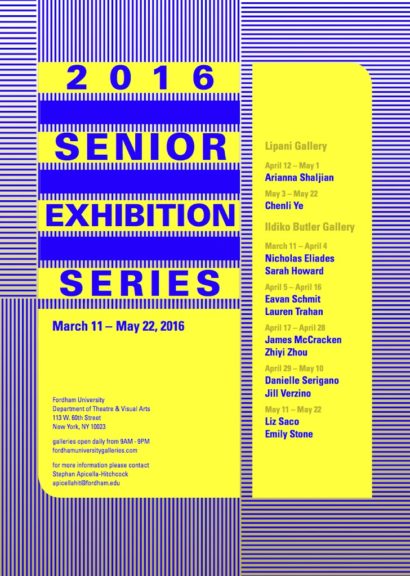
2016 Senior Exhibitions
THE EVIL GENIUS OF A KING
A new project by Matthew Bakkom
Curator: Stephan Apicella-Hitchcock
October 14–December 6, 2015
Reception: Thursday, October 29, 6–8 pm
Fordham University’s Lipani Gallery
113 West 60th Street, New York, NY 10023
fordhamuniversitygalleries.com
The Lipani Gallery is located in the Visual Arts Complex in the street level of the university
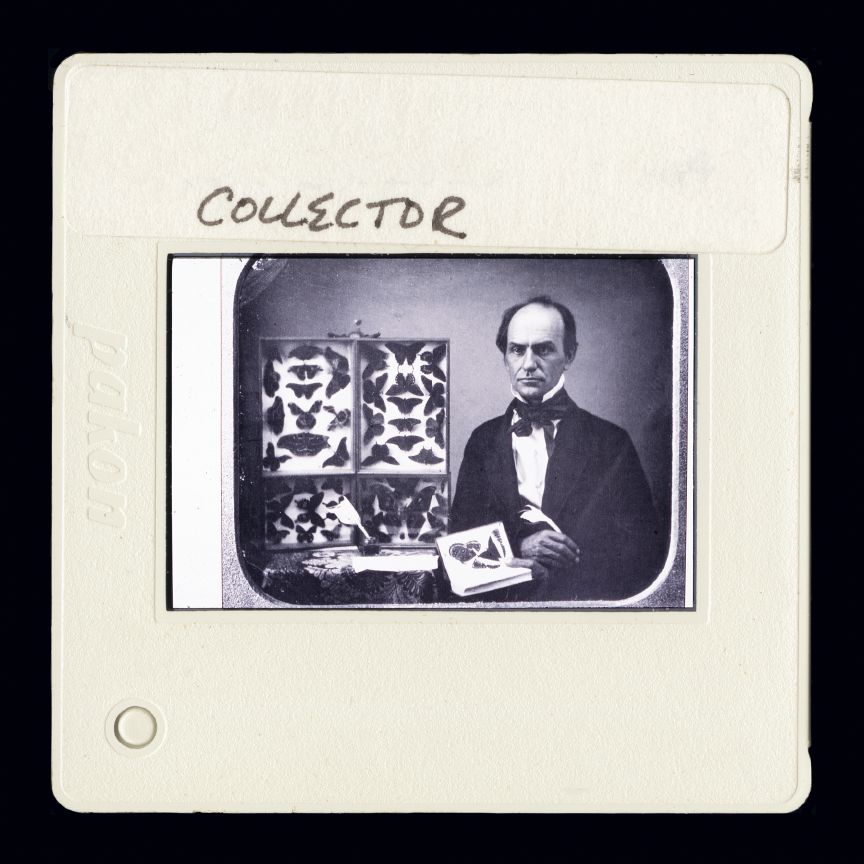
Image caption: Collector, 12.5” x 12.5” mounted Inkjet print, 2013
The Department of Theatre and Visual Arts at Fordham University is pleased to present THE EVIL GENIUS OF A KING, a new project by Matthew Bakkom. This exhibition brings together fifty-two enlargements made from a deaccessioned art and art history slide collection from St. Cloud University in Minnesota.
The artist was given this teaching collection—approximately ten thousand 35mm slides—and utilized the material to generate a survey through the history of art; however, a survey that entirely avoided traditional classification according to eras and movements, rather interpreting the collection based on chance juxtapositions and natural affinities. The 12.5” square images are installed in a continuous band that encircles the Lipani Gallery. Connections arise at times from linguistic puns between caption information on the slide mount, from formal relationships between images, and from associations between image content.
One might consider the sequence of imagery not unlike a plan for a discursive lecture in support of a curious theory. In this respect, Bakkom’s working methodology and objectives are illuminating:
“I proceeded to draw them [the slides] one by one from the large boxes into which they had been cast. The very first that came to hand was an image that inspired the title of the show. From this point of departure I combed through the remainder, sifting and winnowing in the hopes of discovering what exactly the evil genius of a king might be. I invite the audience to join me in this speculation, one that is pieced together through a series of new photographic documents that aspire to grasp and share specific moments of our shared aesthetic and technological past.”
THE EVIL GENIUS OF A KING is a subjective inquiry into the trajectory of art history, as well as homage to a now obsolete teaching technology. The shift from the first image in the exhibition, the boardroom of the Whitney Museum of art, to the second, the Tower of Babel, sets the tone for what is to follow. Across fifty-two slides, art historical notions pertaining to style, influence, and tradition are circumvented, yielding a visual narrative that is alternately critical, poignant, and at times quite humorous.
Stephan Apicella-Hitchcock, 2015
(for more information please email: apicellahit@fordham.edu)
Matthew Bakkom (B.1968) is an Assistant Professor at the University of Wisconsin-Madison. Since the early 1990’s he has been active as an artist and organizer in the U.S. and Europe. His first book, New York City Museum of Complaint was published in 2009 by Steidl-Miles.

Ladislav Sutnar: Pioneer of Information Design
The Ildiko Butler Gallery
October 5 – December 14
Talk by Greg D’Onofrio on Wednesday, Oct 14th at 6:30pm
Closing Reception on December 8th at 6pm
The dissemination and configuration of information is more important than ever with the internet, mobile gadgets and social media as the default means of communication, commerce and research. Data organization and accessibility has its roots in the work of graphic designer, Ladislav Sutnar (1897-1976). From 1941–60, Sutnar, who had settled in New York City in 1939 after migrating from Czechoslovakia, served as the art director for F.W. Dodge Corporation’s Sweet’s Catalog Service, producers of a wide range of industrial catalogs. Sweet’s catalogs brought together into one source plumbing, electrical, and building supplies which were marketed to the architecture and engineering trades. Along with his team of researchers, writers and designers (including Director of Research Knud Lönberg-Holm), Sutnar transformed the complex language of product information into clear, concise, and easy to use visual communication. The attributes of these ground-breaking catalogs are the precursor to what we now refer to as information design.
Sutnar’s designs were rooted in the Modernist and Constructivist ideas of the European Avant Garde. His well-defined visual systems and standardized ways of navigating information integrated form and content into dynamic visual units. Sutnar controlled the flow of information using geometric shapes, symbols, blocks of color, thick rules, logical navigation aids, indexes and typographic hierarchy.
This exhibition is a rare opportunity to see over fifty Sweet’s catalogs along with other published work by Sutnar relating to information design. The examples show how careful analysis and fundamental problem solving can revolutionize new standards of form and function. Sutnar’s pioneering work is as relevant today as it was more than 74 years ago. He was a master at making the complex simple, an arduous challenge that continues to resonate today.
Ladislav Sutnar: Pioneer of Information Design is curated by Patricia Belen & Greg D’Onofrio – graphic designers, writers and educators. Please visit thisisdisplay.org for more information. Sponsored by The Visual Arts Department, Fordham University, organized by Abby Goldstein, Associate Professor with assistance from Margaret McCauley, BA 2017.
The 2014-2015 Ildiko Butler Travel Grant Recipients
Featuring: Qinrui Hua, Giovani Santoro, Aubrey Vollrath
Curators: Stephan Apicella-Hitchcock and Joseph Lawton
Hayden Hartnett Project Space
Fordham University at Lincoln Center MAP
113 West 60th Street at Columbus Avenue
(Inside the office of Undergraduate Admission room 203)
New York, NY 10023
haydenhartnettprojectspace.com
Dates: May 2015 – May 2016
For more images of the recipient’s work, please visit the exhibition website.
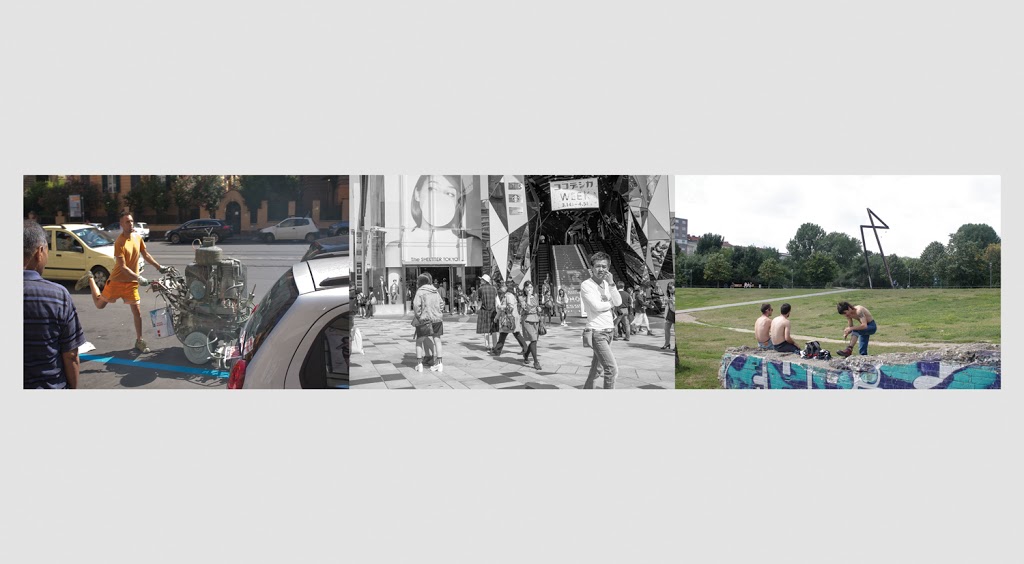
The Ildiko Butler Travel Grant is awarded to four photographers in the Department of Theatre and Visual Art each year who demonstrate exceptional promise. The grant amount is $3,500 and enables students to generate a substantial body of work while traveling abroad in their proposed countries. The Department of Theatre and Visual Art is pleased to present the photographs of Qinrui Hua, Giovani Santoro, and Aubrey Vollrath made in Japan, Italy, and Germany respectively. Their work represents a range of locations and interests; however, despite the differences in their individual focus, each photographer is engaged in the process of carefully studying the world and representing it in a straightforward, descriptive manner.
Applications are accepted each year in March. Please direct questions regarding the application guidelines to the Department of Theatre and Visual Arts in room 423.
Image captions left to right: Giovani Santoro, Italy; Qinrui Hua, Japan; Aubrey Vollrath, Germany
The Hayden Hartnett Project Space presents yearlong exhibitions of work produced by students from the Department of Theatre and Visual Art. It is located on the second floor in the Office of Undergraduate Admission, room 203. The hours for the Hayden Hartnett Project Space are 9 – 5, Monday through Friday.

Curator: Stephan Apicella-Hitchcock
Exhibition dates: May 27–September 30, 2015
Reception: Wednesday, September 16, 6–8 pm
Summer Vet Together: Thursday, July 16, 4–7 pm. For all students, veterans, faculty, friends, staff, and allies
Fordham University’s Lipani Gallery 113 West 60th Street, New York, NY 10023 fordhamuniversitygalleries.com
veteransphotographers photographersveterans brings together forty images made by eight artists who have studied photography at Fordham University. Philip D’Afflisio, Dawn Jolly, Cody Adam Pearce, Oswaldo Pereira, and David Wiggins are Fordham University alumni and Douglas Dacy, James McCracken, and Giovani Santoro are currently matriculated students.
Working in black and white, color, and with both traditional and digital photographic technologies, their work represents a range of years, styles, and interests; however, despite their differences, each photographer is engaged in the process of carefully studying the world and representing it in a descriptive manner. Significantly, each of the exhibition participants is a veteran of the United States Armed Forces.
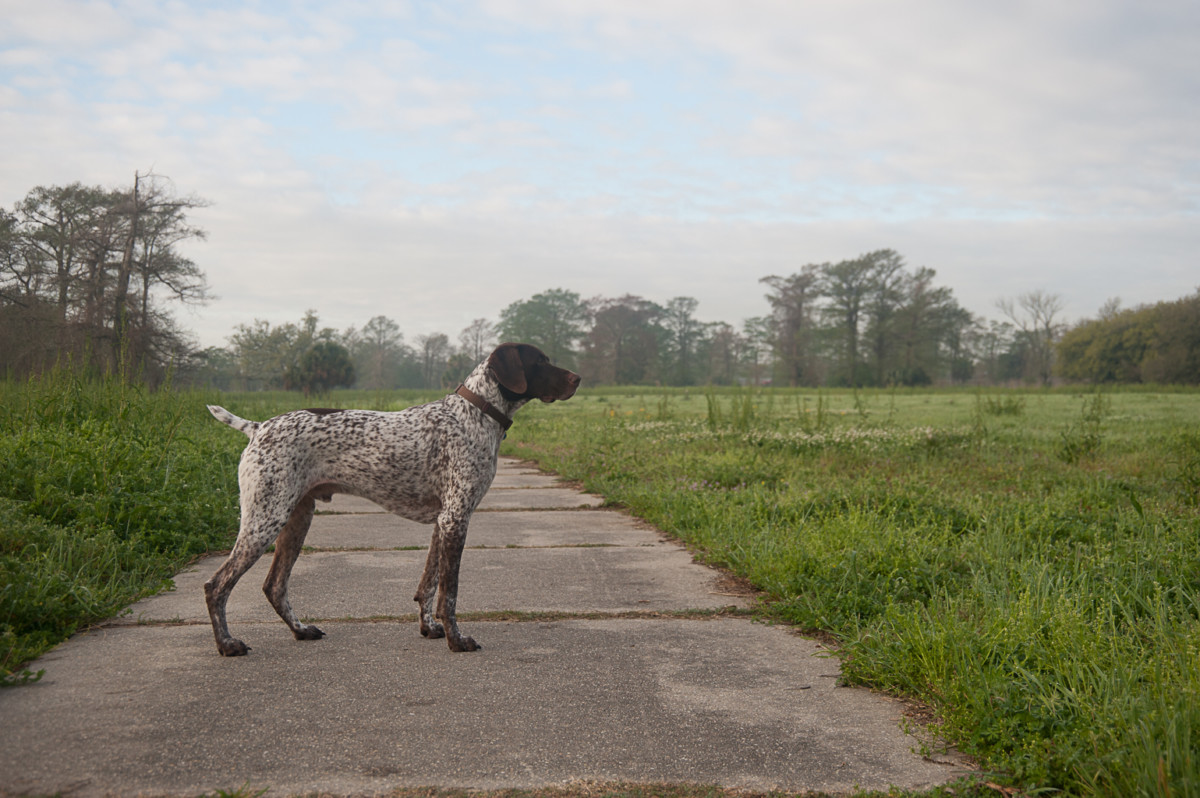
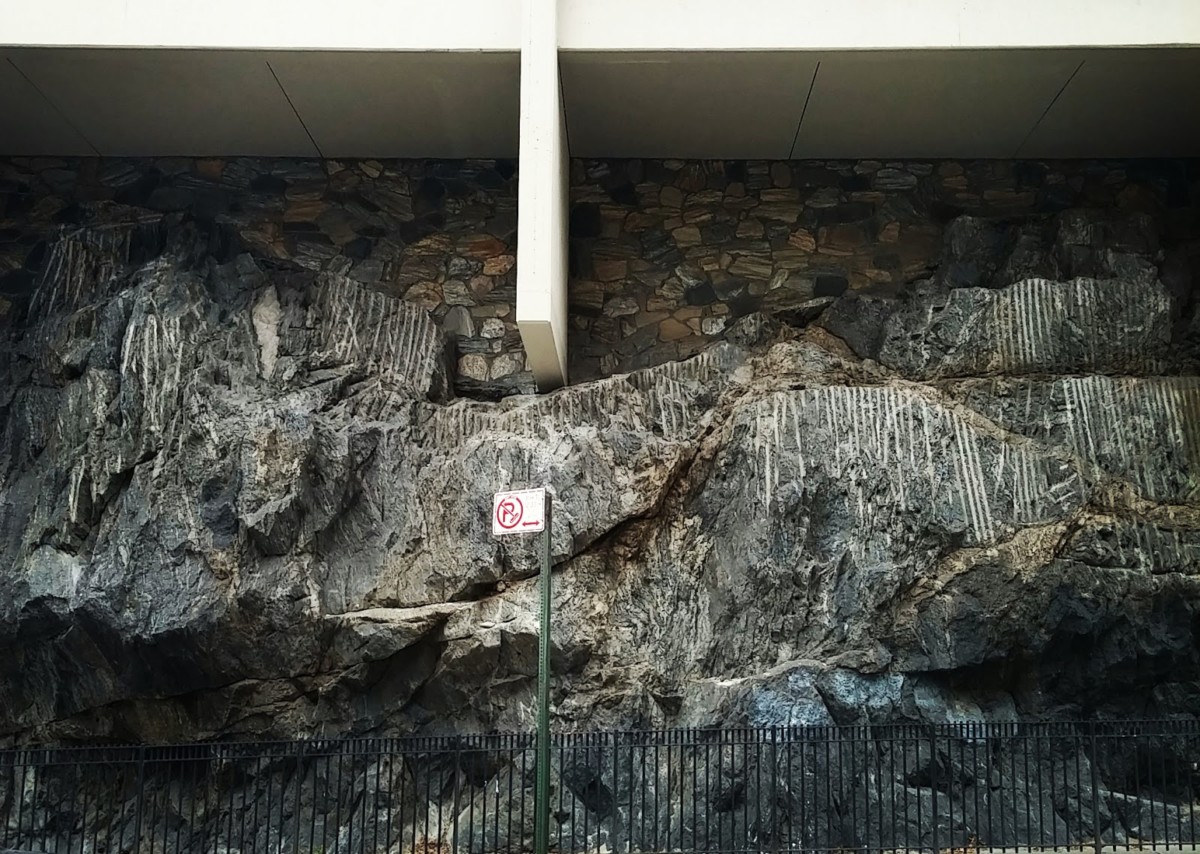

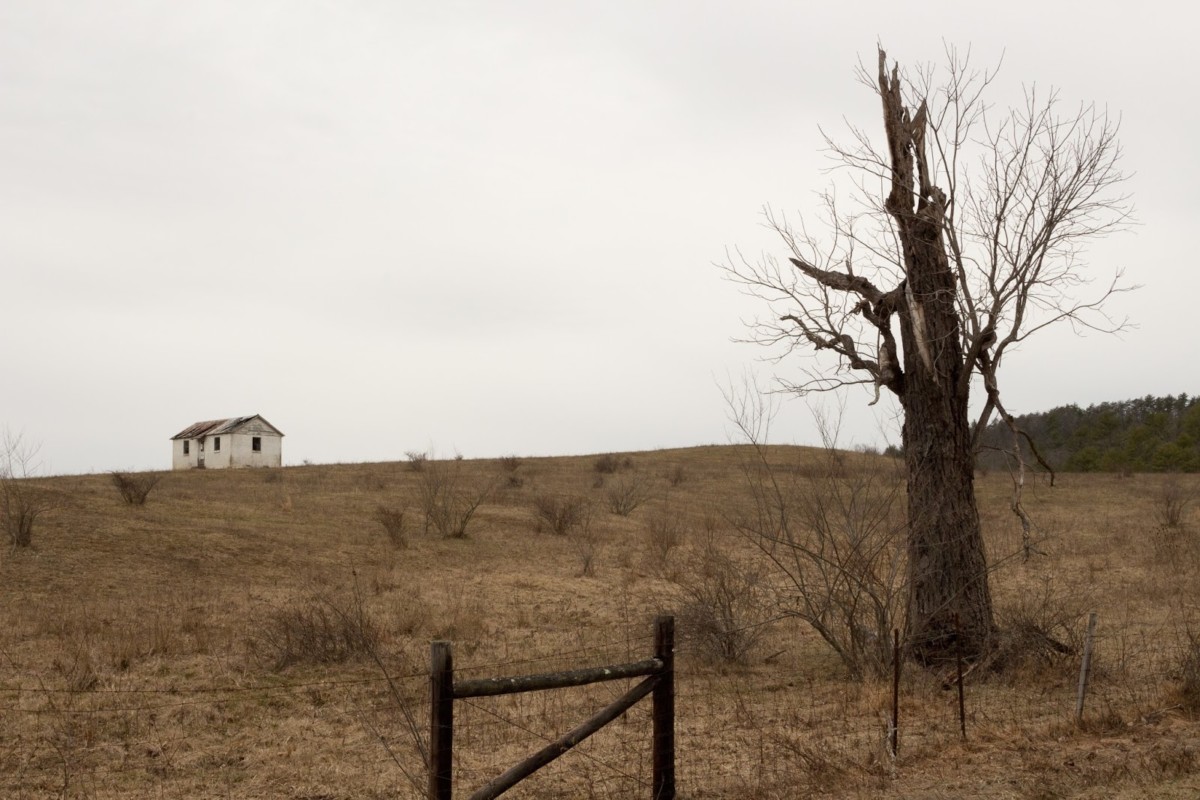
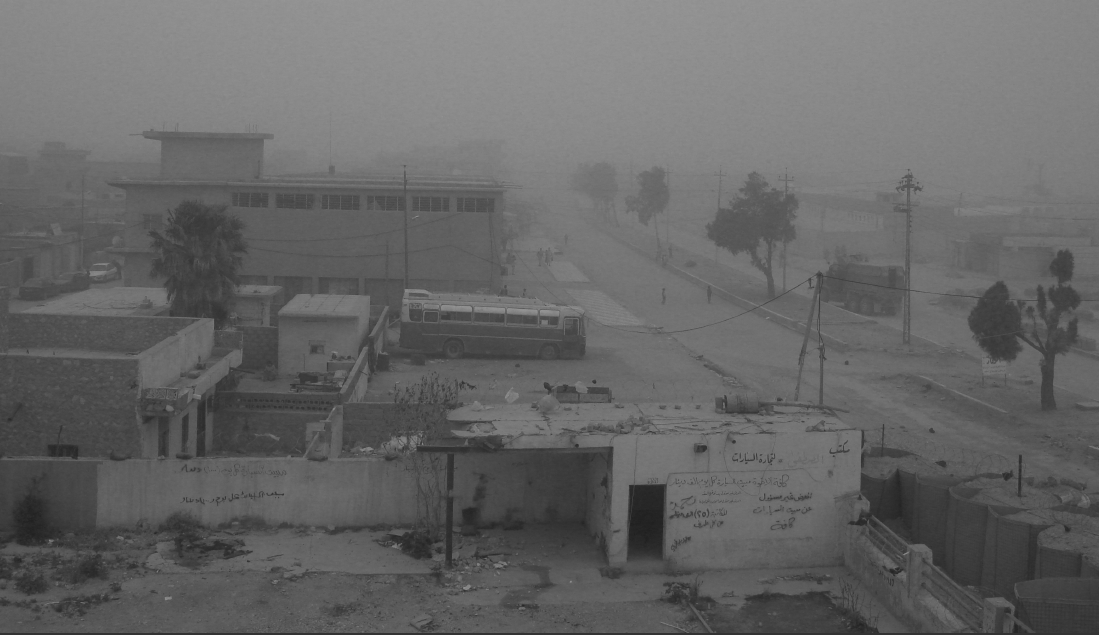
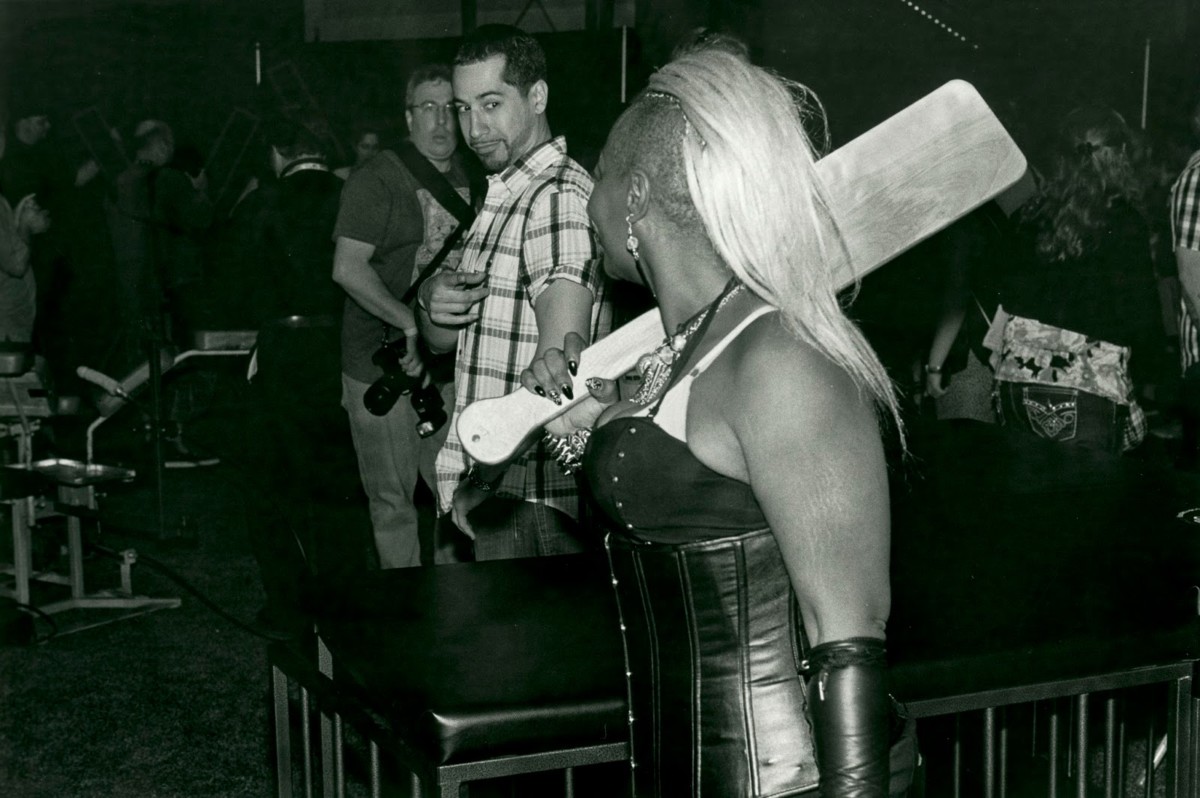
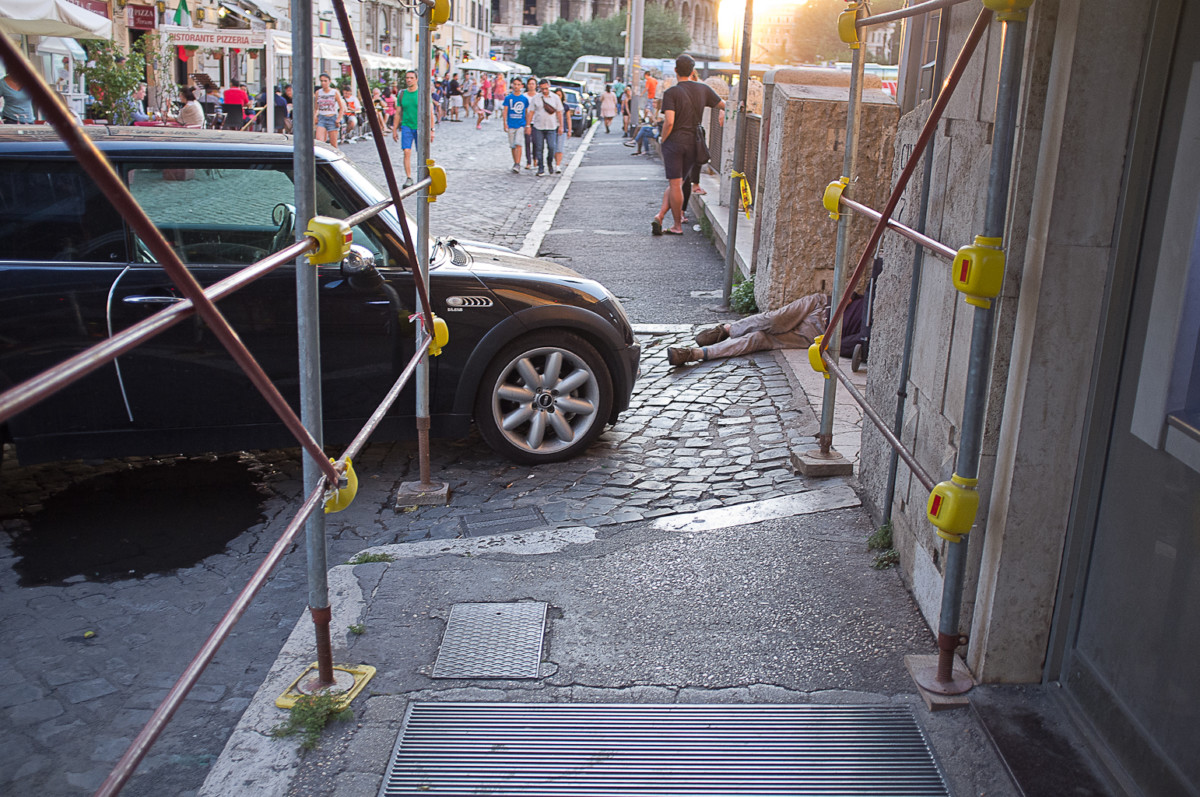
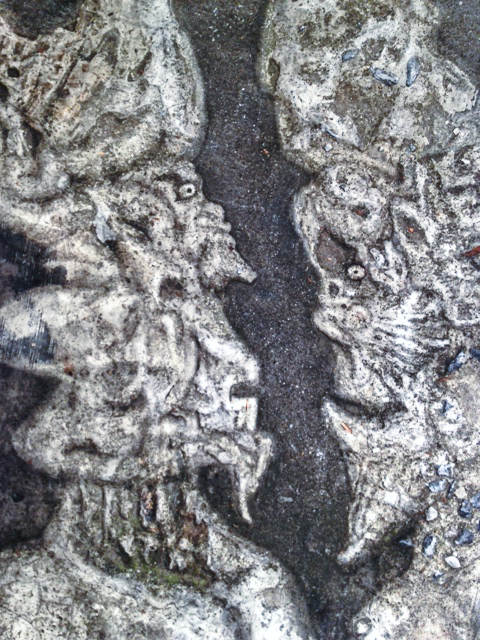
Regardless of the photographers’ chosen subjects, all participants in this exhibition are deeply engaged in the process of looking at what is in front of them. Their images embrace a long tradition in the medium of photography that celebrates the revelatory power of direct representation.
Stephan Apicella-Hitchcock, 2015
(for more information please email: apicellahit@fordham.edu)
My Ranching Life
Featuring works by: Jean Laughton
Curator: Stephan Apicella-Hitchcock
Exhibition dates: May 22–September 30, 2015
Reception: Wednesday, September 23, 6–8 p.m.
The Ildiko Butler Gallery
Fordham University at Lincoln Center MAP
113 West 60th Street at Columbus Avenue
New York, NY 10023
The gallery is open from 9am to 9pm everyday except on university holidays
fordhamuniversitygalleries.com
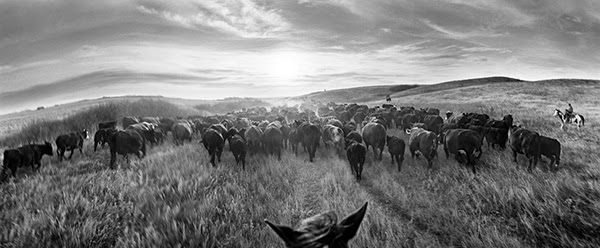
Image caption: Riding Drag on the Brunsch Ranch, 2012
This day we were ‘neighboring’ on the Brunsch family ranch and working with a crew of about twenty other neighboring ranchers. We do this in the fall and spring to help each other out. Just at sunrise, we gathered over four hundred pairs and trailed them a few miles into the corrals at the headquarters of the ranch for shipping day. This was when I first started cowboying, so I was appropriately riding drag, in the back. – Jean Laughton
My Ranching Life by Jean Laughton brings together eighteen black and white prints made from negatives shot between 2002 and 2011. A native Iowan, photographer Jean Laughton moved from New York City after sixteen years of residence to the Badlands of South Dakota in 2002 to pursue her projects. What was initially intended to be a brief photographic opportunity turned into thirteen years, with Jean working her way up from ranch hand novice to ranch manager at Lyle O’Bryan’s Quarter Circle XL Ranch.
The photographs in My Ranching Life are a small sample selected from hundreds of images made by Laughton over an extended time period; nevertheless, they represent a thoughtful depiction of a ranching community from the perspective of a participant, as opposed to that of an outside observer. Her photographs document the realities of the vocation—all panoramas are shot from horseback while working—and give shape to a depiction of American ranching life shorn of gloss and stereotype. The following statement by Laughton captures the essence of her endeavor succinctly:
I feel lucky to work in an area of ranches where things are done the old way—in the day of herding cattle on 4 wheelers I am happy to say we do it all on horseback. And we also brand with a wood fire and drag the calves in on horseback. There are many here who take pride in their cowboying—keeping the traditions and the spirit of individualism alive.
I would like to offer a very special thanks to Jean Laughton for her decision to leave New York City back in 2002. We would not have her timeless landscapes and lovely testimonial on display in Fordham University’s Ildiko Butler Gallery had she not decided to radically change her life by leaving behind the big city and beginning her new ranching life. For more information about My Ranching Life, Jean’s story, as well as her other related projects, Go West, and Americana, please visit her website.
Stephan Apicella-Hitchcock, 2015
For more information contact: Stephan Apicella-Hitchcock
For the Visual Arts Department Blog: click here
For the Visual Arts Department Website: click here
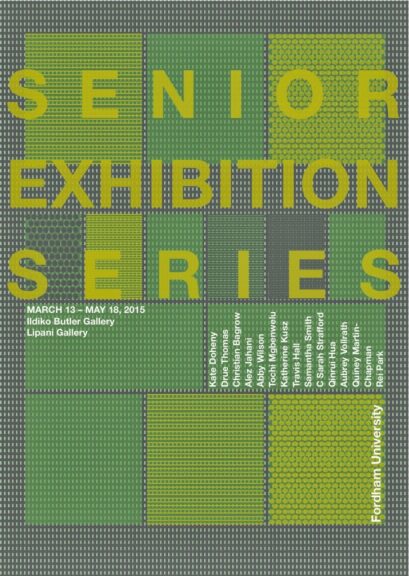
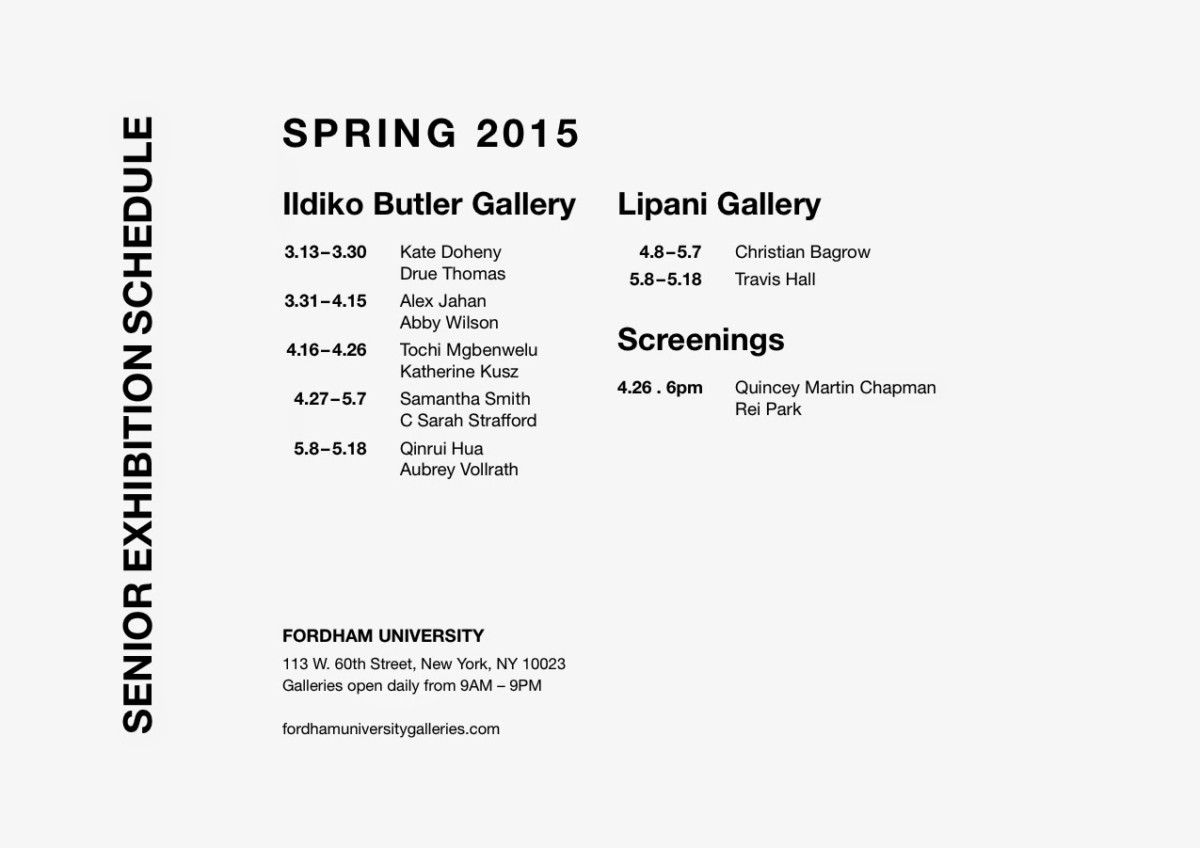
(design by Margaret McCauley)

The Ildiko Butler Gallery
Fordham University at Lincoln Center MAP
113 West 60th Street at Columbus Avenue
New York, NY 10023
ildikobutlergallery.com
Featuring works by:
Stephan Apicella-Hitchcock
Richard Kalina
Anibal Pella-Woo
The current display of works in Fordham University’s Ildiko Butler Gallery is the 2015 installment of the annual Faculty Spotlight Exhibition. Each year in the fall three members from the Department of Theater and Visual Art are asked to share a sampling of their production with the Fordham community. Richard Kalina represents painting this year and photography is represented by both Stephan Apicella-Hitchcock and Anibal Pella-Woo. Despite the differences in their mediums and approaches, their works generate a lively dialogue regarding content and representational methods.
Dates: February 3, 2015 – March 10, 2015
Reception: Tuesday, February 3, 2015, 6 – 8 p.m.
WEB:
For more information please contact: apicellahit@fordham.edu