Straight from the Lipani Gallery: David Freund’s “Gas Stop” in The Guardian
From 1978 to 1981, David Freund photographed petrol stations in more than 40 US states – adding up to an everyman portrait of America. Read The Guardian article here.
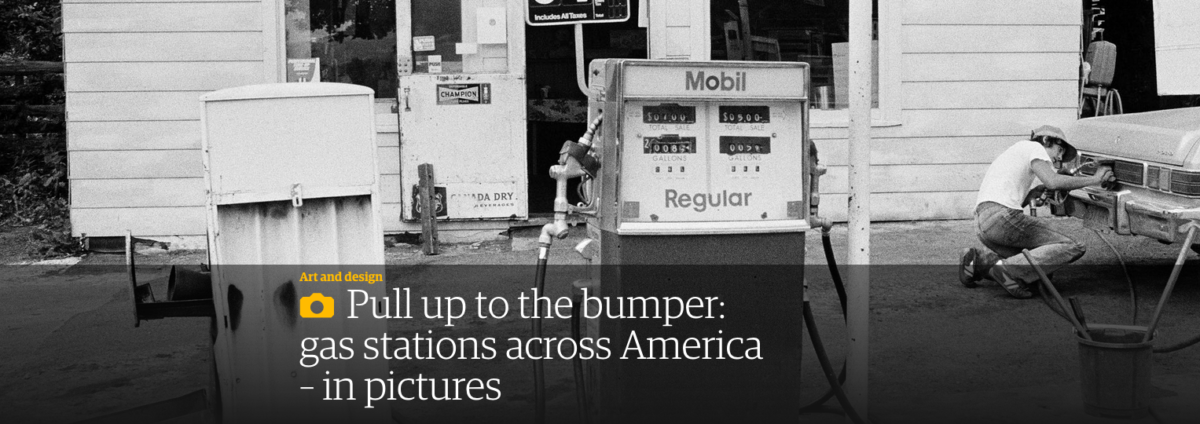
From 1978 to 1981, David Freund photographed petrol stations in more than 40 US states – adding up to an everyman portrait of America. Read The Guardian article here.
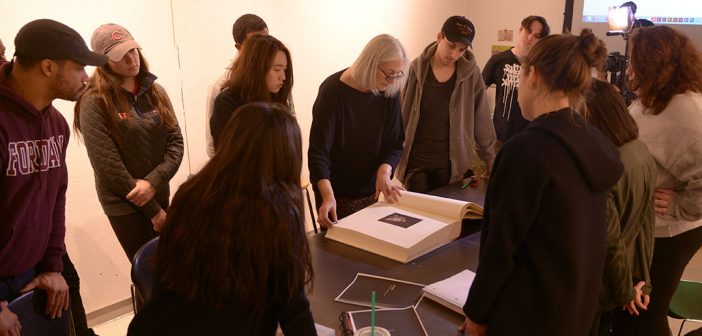
Susan Kismaric, an adjunct professor of photography, spent 35 years as a curator of photography at the Museum of Modern Art before retiring in 2011. Students taking her courses, one on the history of photography and another on books of photography, have long been the beneficiaries from her strong connections in the photography world.
Now, the University is benefitting too; she recently helped procure a book of 200 photo-offset lithographs by master printer Richard Benson, a donation from Yale University that is one of a limited print run.
The weighty book was produced by the Gilman Paper Company under the direction of Howard Gilman, a descendent of the company’s founder and collector of rare photographs. Largely considered one of the world’s premier photography collections, the Gilman trove of 8,500 photographs was purchased by the Metropolitan Museum of Art in 2005.
The donated book serves as an album of the collection’s highlights, said Kismaric.
Kismaric’s professional relationship with Benson, the former dean of the Yale School of Art, facilitated the donation of the book by Yale to Fordham Libraries. He is largely considered one of the best printers in the world, said Kismaric.
The lithographs are particularly significant, she said, in that they match not just the tonality and tone of the original prints, but also their finish as well. In fact, the reproductions are so convincing that MoMA mounted an exhibition of the originals beside Benson’s prints in a 2008 exhibition titled The Printed Picture.
View video here.
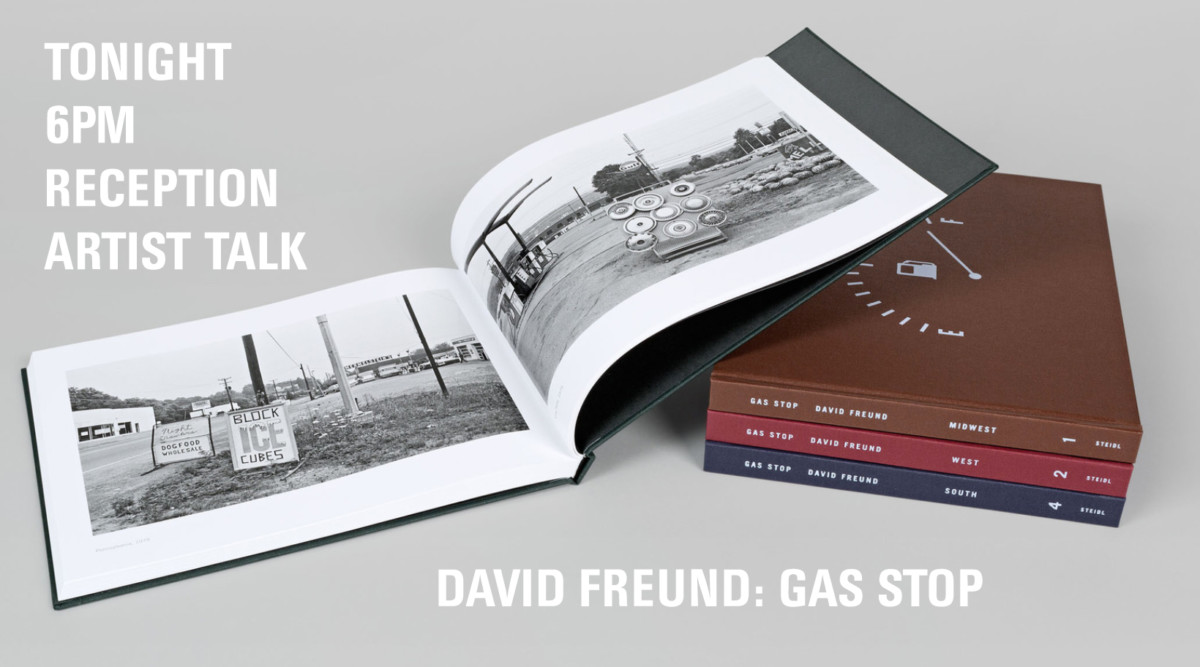
David Freund: Gas Stop 1978-1981
The Lipani Gallery
March 1–March 31, 2017
Reception: Wednesday, March 22, 2017, 6–7 pm
Artist Talk: 7–8pm
Curator: Stephan Apicella-Hitchcock
Fordham University is proud to present David Freund: Gas Stop, a sampling of twenty-seven black & white photographs pulled from a much larger investigation made between 1978 to 1981.
In the twentieth century any American driver or passenger would likely stop at a gas station weekly, not just for gas. Then, gas stations were also oases offering food and drink, car repairs, directions, telephones, maps and, importantly, bathrooms. Yet, beyond appreciation as architectural novelties, they and their offerings have been little photographed.
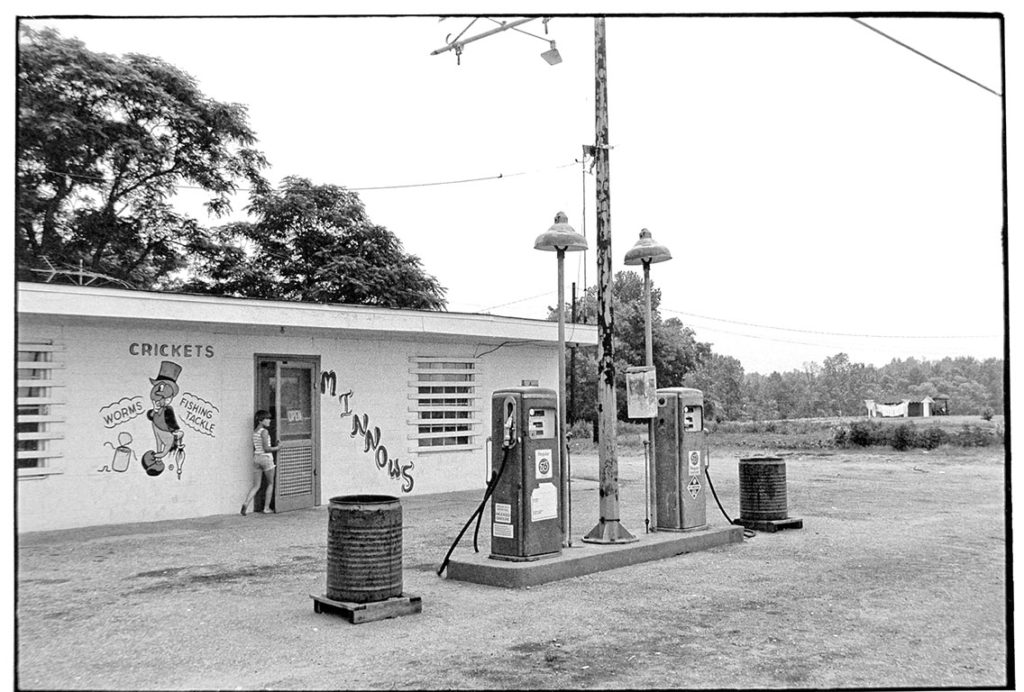
From 1978 to 1981, David Freund looked at the culture, architecture and landscape of gas stations in more than forty states. The photographs show customers and workers interacting, gassing up, or just hanging out. Architecture and signage, both corporate and vernacular, reach out to passing drivers.
Gas Stop presents the designed or natural landscaping seen at stations, and the regional landscapes that hold and surround them. Sparking recognition and recollection, the photographs, accrue as elements in a nonlinear narrative of automotive America.
Of more than 200,000 gas stations in the United States at the time of his project, today about half are gone, especially full service ones. Such stations and their offerings exist now mostly in memory and in this work.
David writes:
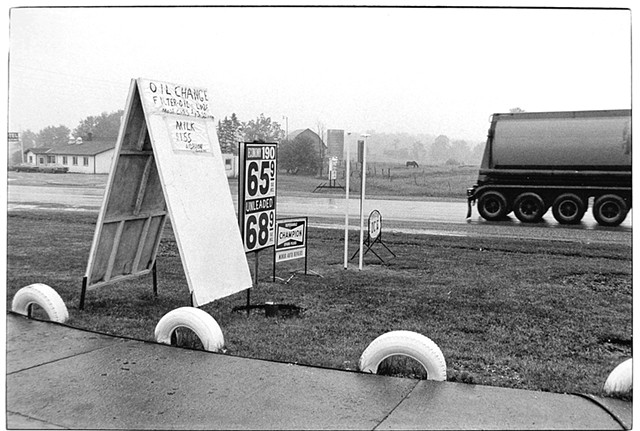
On the first morning of an intended photographic project, outside of my motel was a gas station from which I photographed a dark and rolling tanker truck as its four black tires passed a line of four half-buried white tires. In the misty distance was a grazing horse, framed by the back of the truck. In front of the station was a large, hand-lettered sign advertising milk, and across the road a small, local motel. As someone later commented, “These are about everything.”
The painter Miles Forst once described gas stations as a place to go to fill up your tank and shut off your brain. That morning, however, I became aware of gas stations as a locus for many elements that characterize America. And whether stopping in or hanging out, people in motion are often around to enliven and propel the narrative.
From that moment, looking out from and looking in at gas stations became my new project, which in the end entailed travel to forty-seven states and stops at thousands of stations. All provided discoveries. —David Freund
David Freund Photography
View his forthcoming book on Steidl Books


Artist Talk with Wendel White
Monday, September 19, 11:30 am
SL24E, Visual Arts Complex, Fordham University
Mine, Yours, Ours
A Conversation on Segregation in America, Past and Present with
Rebecca Carroll, Deborah Willis, Marta Gutman, and Wendel White
followed by a reception for the exhibition
Monday, September 19, 6 pm
Franny’s Space, adjacent to the Visual Arts Complex, Fordham University
A Place Out of Time: The Bordentown School
Film Screening and Talk with Director David Davidson
Wednesday, September 21, 6 pm
SL24L, Visual Arts Complex, Fordham University
Last Halloween (my birthday, as it happens), I loaded up my Bolex to shoot some 16mm black-and-white images of a children’s costume parade in my Brooklyn neighborhood. I was thinking of Helen Levitt’s 1948 masterpiece, In the Street. Levitt (and her co-cinematographers James Agee and Janis Loeb) used a small camera to surreptitiously record images (mostly of children) in Spanish Harlem. The film is a poetic time capsule — observational vignettes that become more than the sum of their parts.
The Bolex looks pretty big these days compared to digital cameras, so I wasn’t hiding anything from anybody. As I stood on the sidewalk next to parents snapping cell phone photos, I encountered a fair amount of resistance. Several people asked me point blank what I was doing (which I thought was pretty obvious). They seemed unsatisfied with my admittedly vague response (“Shooting some footage, may turn it into a short documentary”).
Read the rest of the article at filmmakermagazine.com
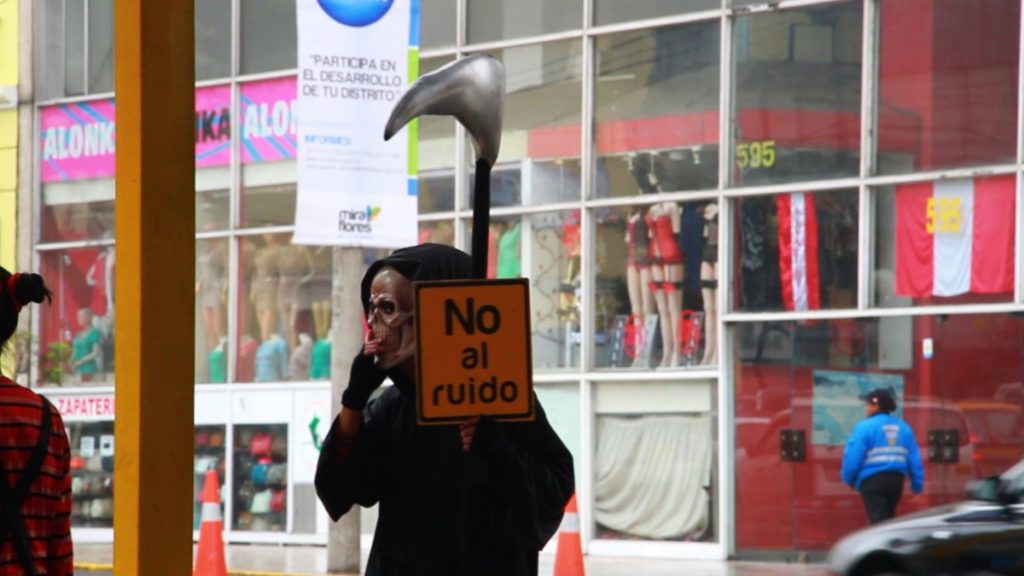
Photo credit: Lima Limpia, 2015, Mark Street.